

Seventeen notes about a very loud insect—and the metaphor behind The Summer of the Cicadas. Read them alongside the essay Joshua Gibbs and I wrote.
There are annual cicadas, which appear every year, and periodical cicadas, such as the ones emerging in the northeast United States, which appear in 13- and 17-year life cycles. Seventeen year and 13 year cicada broods sync up every 221 years. Periodical cicadas are only found in eastern North America, though there are cicadas in many parts of the world.
Periodical cicadas emerging every 13 or 17 years, emerge according to prime numbers of years. This makes it difficult for predators to synchronize with with their patterns. Annual cicadas fall victim to a specialized predatory wasp, but periodical cicadas so far have avoided such predators.
Periodical cicadas that emerge in years before they are supposed to emerge are called stragglers. These are the hipsters of the cicada world, coming out before it is cool.
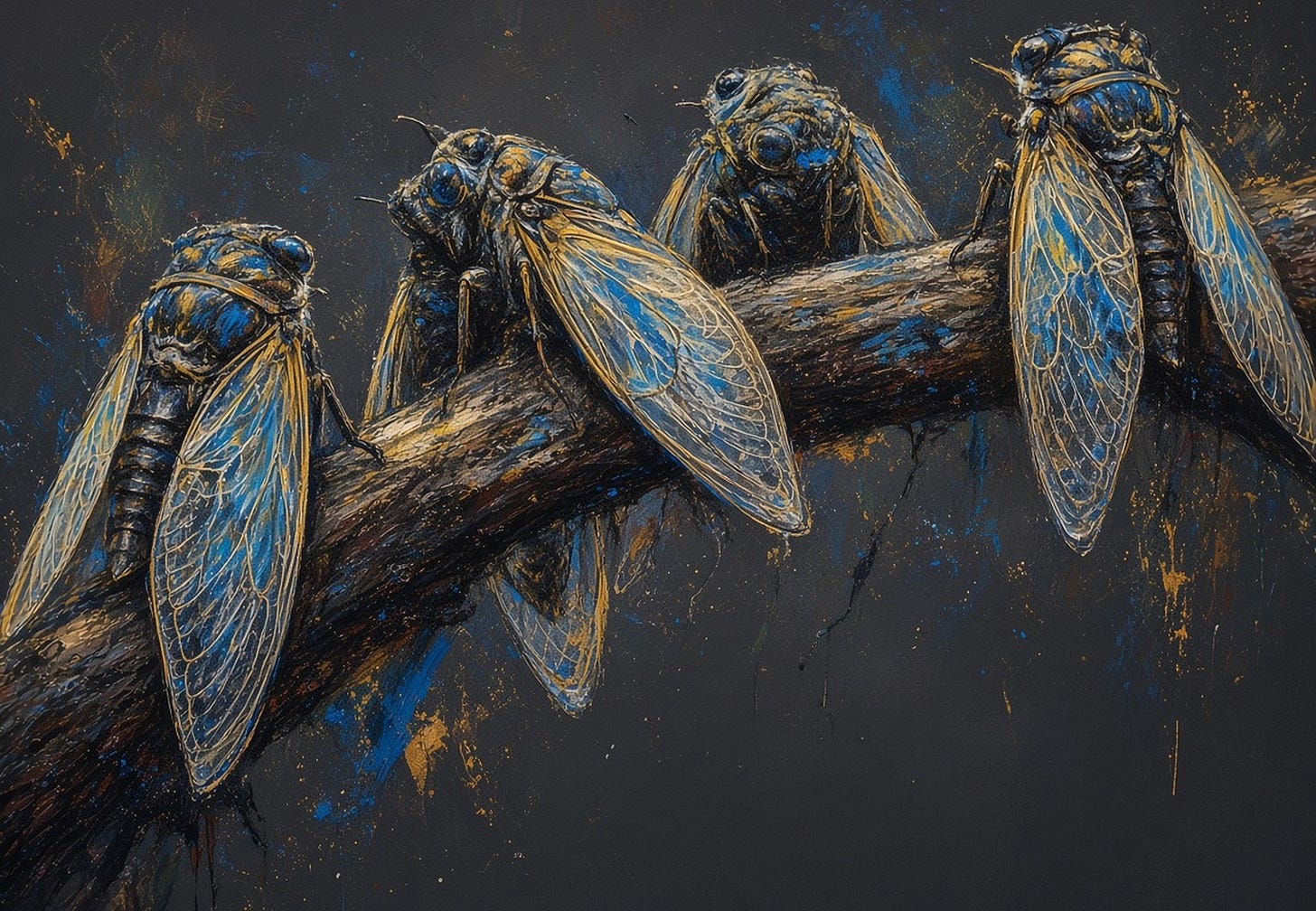
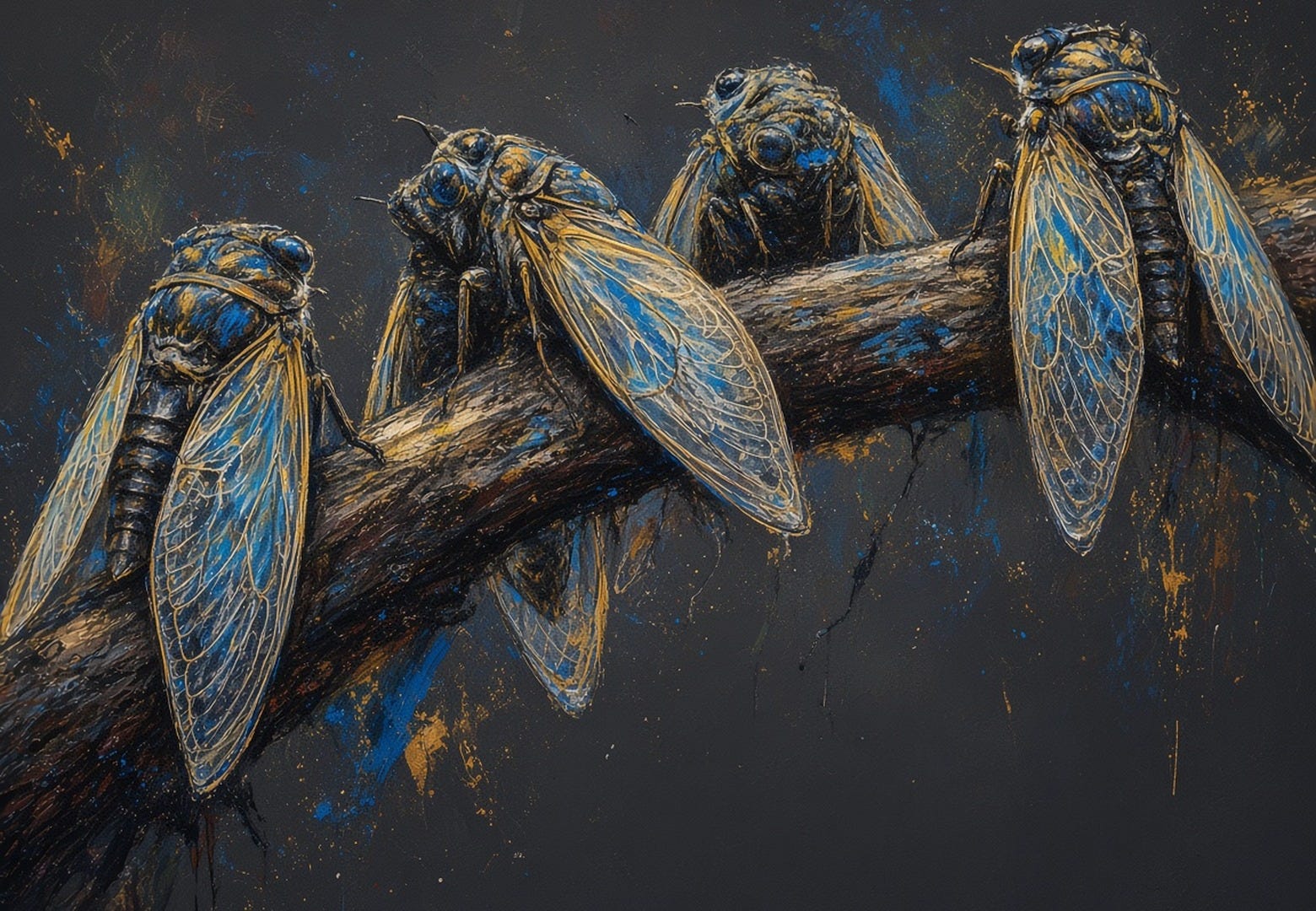
Adult cicadas spend their time in trees looking for a mate. Males sing, females respond by flicking their wings, mating begins, and the cycle of life begins again.
Cicadas begin mating in earnest after only a few weeks of life above ground. Not all cicadas get a chance to mate, however. Some are stuck in their shells, and others have trouble sprouting wings. Many others are devoured by predators.
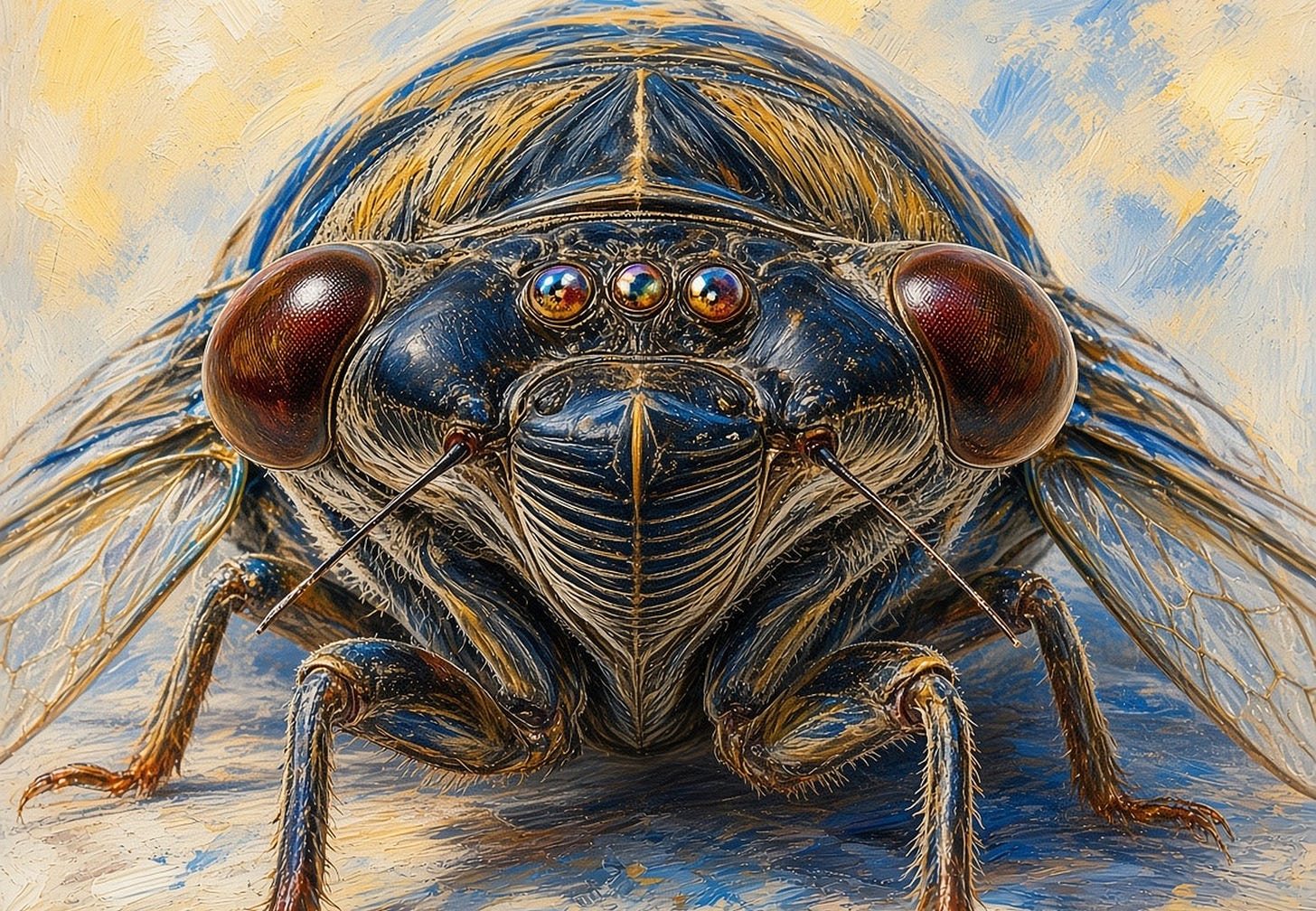
Most 17 Year Cicadas have red eyes, but they can also have white, gray, blue, yellow, or multi-colored eyes. Cicadas have two, obvious, large, compound eyes, and three ocelli. Ocelli are three jewel-like eyes situated between the two main, compound eyes of a cicada.
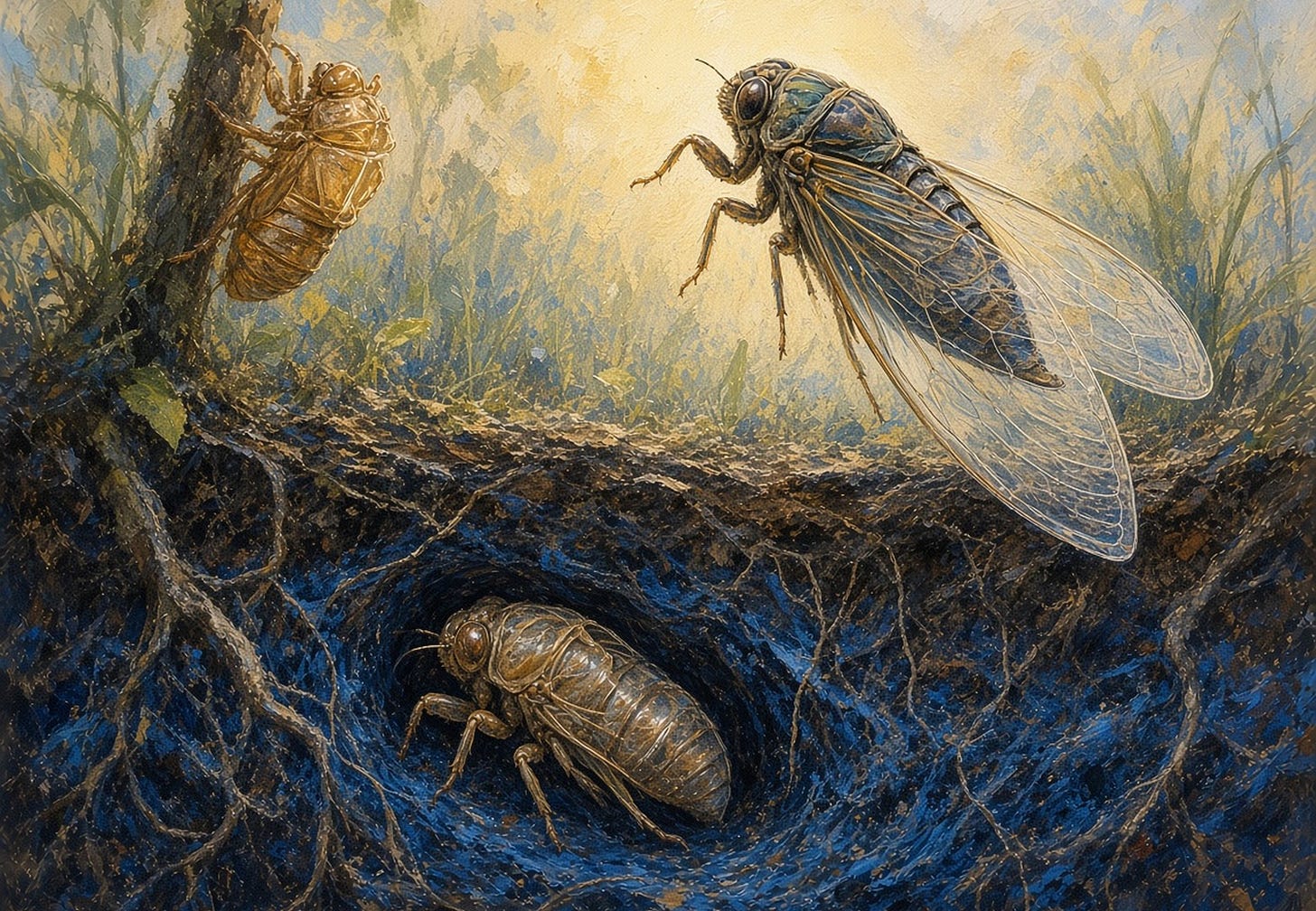
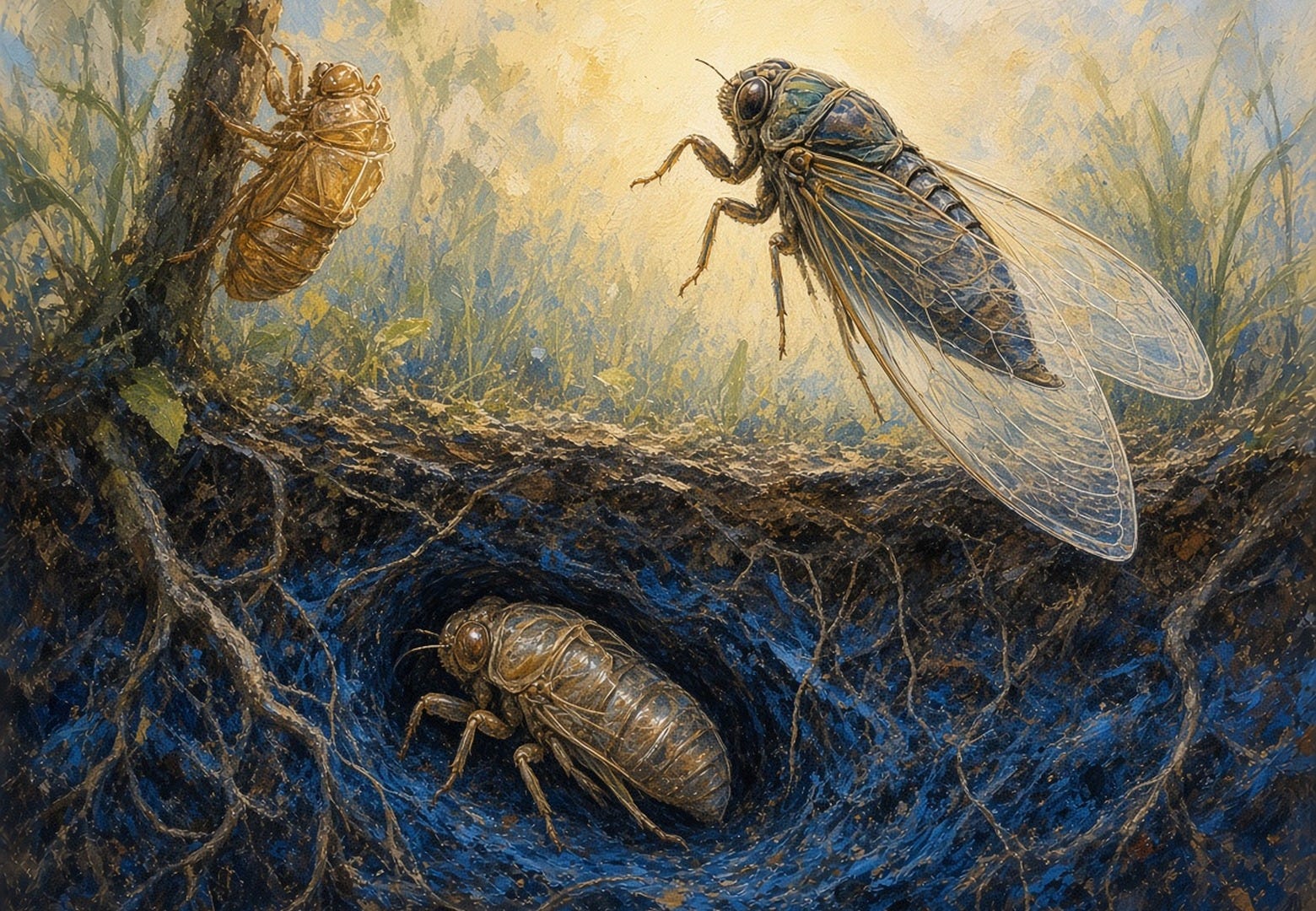
At the end of their life cycle, each female cicada will lay hundreds of eggs into a tree branch. Soon, the eggs hatch into nymphs the size of a grain of rice. The cicada nymph crawls out to the edge of the branch, and lets go in order to free-fall to the ground. Instinct drives them to seek refuge underground, where they burrow and disappear from sight for a very long time.
Cicadas live very full lives while underground. They dig tunnels, build cells, and feed on roots. The long period of time spent doing these things prepares them for their eventual emergence to the eyes and ears of all. Not all that exciting from a human perspective, but it must be fun for them.
Many animals enjoy munching on cicadas. Squirrels will eat them like corn on the cob. Fish go crazy for them too—you can use them as bait, or use lures that mimic them.
Cicadas don’t eat solid foods, but rather drink tree fluids. We’re guessing it’s tasty like beer. It also makes them pee. Some people call this “cicada rain.”
Cicadas are among the greatest ruckus-making insects known to man, and a swarm of them can produce sounds up to 120 decibels. That’s louder than a rock concert, and comparable to the noise from a chainsaw.
Insects are a highly nutritious form of protein. Cicadas can be grilled, boiled, fried, and peppered. Why not consider cicada tacos?
Adults are typically 2.4 to 3.3 cm (0.9 to 1.3 in), depending on species, slightly smaller than the annual cicada species found in the same regions of the United States. Mature females are slightly larger than males.
Only male cicadas make the sound they’re famous for, though females makes their own sound in response to males. Males make different calls for different reasons, and each species has a unique sound. You can actually trick a male cicada into calling for a female by simply snapping your fingers.
Cicadas need to be warm to sing and fly around, but they’re cold blooded. Their dark skin absorbs the heat of the sun, which helps to warm them up.
Both males and females can mate multiple times, although most females seem to mate just once. After mating, the female cuts V-shaped slits in the bark of young twigs and lays about 20 eggs in each, for a total of 600 or more eggs. After about six to 10 weeks, the eggs hatch and the newborn nymphs drop to the ground, where they burrow and begin another 13- or 17-year cycle.
The sixty days of a cicada’s life are brief—like the sixty years of a man’s life. The creature which spends so long in preparation for life accomplishes much living once he has begun. Could a man live a year as thoroughly as the cicada lives a single day?
For more cicada facts, visit Cicada Mania, or enjoy this video. Listen on Bandcamp.